
Grow Your Jacksonville Business Without Costly Leases

Running a small business on the First Coast is one of the most rewarding things you can do, and one of the most expensive if you're not careful about overhead. Commercial rents in Jacksonville's most desirable neighborhoods have climbed steadily alongside population growth, and many entrepreneurs are quietly paying for far more space than their customers ever see. If a significant portion of your lease is sheltering inventory rather than serving shoppers, something needs to change.
The good news is that a growing number of Duval County business owners, from Etsy sellers in Riverside to boutique operators near San Marco, are discovering that affordable business storage in Jacksonville can replace or dramatically reduce their reliance on costly commercial space. A well-chosen storage unit from Atlantic Self Storage gives you the square footage you actually need for product, without locking you into a multi-year commercial commitment that strains your margins every single month.
We'll break down exactly how to make that shift: which unit types work best for different business models, how to organize your space for maximum efficiency, and how to calculate whether the switch makes financial sense for your operation.

The Hidden Cost Trap Facing First Coast Entrepreneurs
Commercial lease prices in neighborhoods like Riverside, San Marco, and along the Beaches corridor have risen sharply over the past several years, driven by demand from both residents and businesses relocating to Northeast Florida. For small business owners, that means paying premium per-square-foot rates for space that often does double duty as a showroom and a stockroom. The problem? You're only monetizing one of those functions.
Think about what actually occupies your leased space on any given Tuesday: shelving units loaded with backup inventory, seasonal stock waiting for its moment, equipment that only gets used a few times a month. For Etsy sellers, boutique owners, and service-based businesses across Duval County, this is a pattern that quietly compounds over time.
- Over-leased and under-optimized: Many small business owners in Jacksonville are renting 1,000–1,500 square feet when their actual customer-facing needs require far less.
- Locked-in commitments: Standard commercial leases run three to five years, leaving little room to scale down when product lines change or seasons shift.
- Wasted capital: Every dollar spent on unused square footage is a dollar not spent on marketing, new products, or hiring your first employee.
The smarter approach is to separate your customer-facing space from your inventory needs entirely and let each serve its purpose at the right price point. That's where flexible, month-to-month storage with Atlantic Self Storage becomes a genuine business tool rather than a last resort.
Why Northeast Florida's E-Commerce Sellers Are Rethinking Space
The First Coast has quietly become a hub for home-based and online businesses. From handmade goods sellers in Fernandina Beach to fishing gear resellers operating near the St. Johns River, a new generation of entrepreneurs is building real revenue streams without traditional storefronts. But growth creates its own challenge: inventory overflow. It's one of the top reasons small business owners consider commercial space before they're truly ready for it.
Jacksonville's coastal living lifestyle fuels a particularly strong niche product economy. Think surf gear for Neptune Beach customers, outdoor adventure equipment for paddlers exploring the tidal marshes, and golf accessories targeted at Ponte Vedra Beach residents near TPC Sawgrass. These products are bulky, seasonal, and impossible to tuck into a spare bedroom indefinitely.
Here's why flexible storage beats a premature commercial lease for online sellers:
- Faster order fulfillment: Organized, dedicated inventory space means you can pick, pack, and ship without hunting through a cluttered garage or spare room.
- Better customer reviews: Faster, more accurate fulfillment directly translates to higher ratings on platforms like Etsy, Amazon, and Shopify.
- Seasonal scalability: Month-to-month rental terms let you upgrade to a larger unit during your peak season and scale back down without penalty when things slow.
- No long-term risk: If your product line pivots, you're not stuck in a five-year commercial commitment that no longer fits your business model.
For a deeper look at how online sellers are making this work locally, explore how running an Etsy business from a Jacksonville storage unit is more practical than most sellers realize, and how the operational playbook is simpler than you'd expect.
Choosing the Right Storage Setup for Your Business Needs
Not all storage units are created equal, and the right choice depends entirely on what you're storing and how often you need to get to it. For most product-based businesses, the first decision is between drive-up and interior units, and the distinction matters more than most people think.
Drive-up storage units in Jacksonville are the workhorses of small business logistics. You pull your vehicle directly to the unit door, load or unload shipments without hauling boxes through hallways, and get back on the road quickly. They're ideal for bulky items, high-frequency access, and anyone who regularly receives or ships pallet-sized quantities of product.
Northeast Florida's intense summer heat makes climate control a serious consideration for many product categories. A stable environment that maintains a consistent temperature range protects inventory that could otherwise warp, melt, or degrade during the hottest months. For sellers of premium goods, the cost difference between a standard and a climate-controlled unit is almost always worth it. You can explore why climate-controlled storage makes sense in Jacksonville to weigh the specifics for your inventory type.
Use this quick checklist to estimate the right unit size for your business:
- Count your pallets or shelf units. A standard 10x10 unit holds roughly 4–6 standard pallets with room to maneuver.
- Factor in your peak season volume. Size up one step from your current needs so you're not scrambling in Q4.
- Consider access frequency. If you're visiting daily or several times a week, a drive-up unit with extended or 24-hour access is worth prioritizing.
- Account for product sensitivity. Anything that can be damaged by Northeast Florida's summer heat belongs in a temperature-regulated unit.
Gated access and resident manager oversight are also key security features to look for. Many Jacksonville-area locations also offer extended or around-the-clock access, which is a genuine advantage for sellers who ship early in the morning or late in the evening to meet carrier cutoffs.
Smart Strategies for Organizing Your Storage Unit Like a Pro
A storage unit that's organized like a pro warehouse saves you time, reduces errors, and keeps your business running smoothly, even if you're only visiting a few times a week. The single most effective approach is a zone-based layout: divide your unit into three distinct areas and treat each one like a department.
- Inbound zone: This is where new stock lands when it arrives. Keep it near the door for easy unloading, and process items out of this zone quickly to avoid buildup.
- Ready-to-ship zone: Your active inventory lives here, including products that are currently listed, in season, or awaiting orders. This should be your most organized and frequently visited section.
- Seasonal or slow-moving zone: Push this toward the back. Items here don't need daily access, so they can be stacked higher and packed more densely.
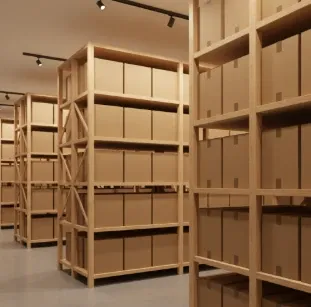
For more detailed organization strategies, our guide on organizing your storage unit for easy access covers a range of practical techniques that work just as well for business inventory as for personal belongings.
Calculate Your Savings and Take the Next Step
A well-chosen storage unit in Jacksonville typically runs a fraction of what comparable commercial lease space costs per square foot. When you separate your inventory needs from your customer-facing space, you free up capital that can go directly into marketing, product development, or your first hire.
Start by running the numbers for your own situation. Take your current monthly lease cost, divide it by your total square footage, and then calculate what percentage of that space is actually used for inventory or equipment rather than for serving customers. Then compare that to what a comparable storage unit would cost in your area of Duval County or the surrounding First Coast communities. For most over-leased small businesses, the math is eye-opening.
You can browse business storage units in Jacksonville to find a location near you and ask about business-friendly features in person. Protecting your inventory, your investment, and your peace of mind is the foundation of sustainable growth on the First Coast, and it starts with choosing the right space at the right price from Atlantic Self Storage.